
Understanding Servo Motor Pins, Drivers, and AC Servo Motor Working Principles

Servo motors play a crucial role in various automation and robotics applications, offering precise control over rotational or linear motion. To effectively use a servo motor in your projects, understanding the basics of servo motor pins, different types of servo motor drivers, and the working principles of an AC servo motor is essential. This article breaks down these concepts to help you get started.
Servo Motor Pins
Servo motors generally have three main pins: power, ground, and signal. These pins allow the servo to function by receiving power, maintaining electrical grounding, and processing control signals to adjust the motor's position.
- Power Pin: This pin is connected to the power source, typically 5V for small servo motors. It provides the necessary voltage for the motor to operate.
- Ground Pin: The ground pin is connected to the ground terminal of the circuit. It completes the electrical circuit and helps prevent electrical noise interference.
- Signal Pin: The signal pin receives Pulse Width Modulation (PWM) signals from the controller, which determine the angle of rotation for the servo motor. These signals control the motor's position by adjusting the width of the pulse sent to the signal pin.
Understanding these pins is vital for connecting the servo motor correctly and ensuring that it responds accurately to control inputs.
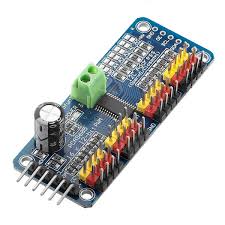
Servo Motor Driver
A servo motor driver is an electronic device that interfaces between the controller (such as a microcontroller or PLC) and the servo motor. It converts low-power control signals into higher-power signals needed to drive the motor. There are different types of servo motor drivers available, each designed for specific types of motors:
- DC Servo Motor Drivers: These are used for DC servo motors, which run on direct current. They are suitable for simple applications and offer straightforward speed and position control.
- AC Servo Motor Drivers: Designed for AC servo motors, these drivers provide more sophisticated control over speed, torque, and position. They are widely used in industrial applications where high precision is required.
- Stepper Servo Drivers: Although not technically "servo" motors, stepper motors can use servo drivers for enhanced accuracy in applications requiring precise movement.
Choosing the right servo motor driver depends on the motor type and the requirements of the project. Using an appropriate driver ensures efficient motor operation and protects the system from electrical damage.
AC Servo Motor Working Principle
The AC servo motor is a specialized electric motor that operates on alternating current (AC) and is known for its high precision in motion control. The working principle of an AC servo motor involves several components, including a stator, rotor, encoder, and a servo drive:
- Stator: The stator generates a rotating magnetic field when an AC voltage is applied to it. This field interacts with the rotor, causing it to rotate.
- Rotor: The rotor follows the magnetic field generated by the stator, resulting in rotation. The speed and direction of rotation depend on the frequency and phase of the AC voltage.
- Encoder: An encoder attached to the rotor sends feedback signals to the servo drive, which monitors the rotor's position and speed.
- Servo Drive: The drive processes the encoder feedback and adjusts the motor's power supply to maintain the desired position and speed.
The key advantage of AC servo motors is their ability to provide high torque and maintain a stable speed, even under varying load conditions. This makes them ideal for industrial automation tasks such as robotic arms, CNC machines, and conveyor systems.

Frequently Asked Questions
1. What are the main differences between AC and DC servo motors?
AC servo motors are more suitable for industrial applications requiring high precision and high-speed control, while DC servo motors are easier to control and are commonly used in smaller-scale projects.
2. Can a servo motor operate without a driver?
No, a servo motor requires a driver to convert the control signals from a microcontroller or PLC into the power levels needed to move the motor.
3. Why is an encoder important in an AC servo motor?
The encoder provides real-time feedback on the rotor's position and speed, allowing the servo drive to make accurate adjustments for precise motion control.
Servo motors are essential components in automation and robotics, and understanding the roles of servo motor pins, drivers, and the AC servo motor working principle can help you optimize your projects. By selecting the appropriate driver and connecting the pins correctly, you can ensure reliable performance and precise control in various applications.
Comparing Servo Motor SG90, MG996R, and MG995 Servo Motors: Which One Suits Your Needs?
Leading Robotics and Automation Companies in Pune, Bangalore, and China


