
Stepper Motor vs Servo Motor: Choosing the Best Option for Your Robotic Arm

When it comes to powering robotic arms, the choice between a stepper motor vs servo motor can be crucial. Understanding the differences, the servo motor working principle, and the specific needs of your robotic application will help you make the right decision. In this article, we will explore the strengths of each motor type and how to select the ideal one for your robotic arm.
What is a Servo Motor?
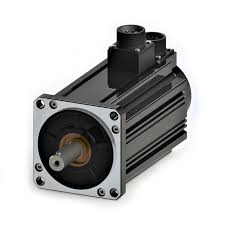
A servo motor is a type of rotary actuator designed for precise control of angular position, speed, and acceleration. It consists of a motor coupled with a position feedback sensor, allowing it to achieve high levels of accuracy. Servo motors are commonly used in robotics, CNC machinery, and automated systems due to their ability to provide smooth motion control.
Servo motor for robotic arm are especially beneficial because they offer: servo motor for robotic arm
- Precise movement: Servo motors can achieve accurate positioning, which is essential for tasks like assembly or object manipulation.
- High torque at low speeds: This makes them suitable for applications where the robotic arm needs to lift or hold heavy objects.
- Closed-loop control: The built-in feedback mechanism ensures that the motor adjusts its position based on real-time data, providing better performance and reliability.

How Does a Servo Motor Work?
Understanding the servo motor working principle helps clarify why it's a preferred choice for robotics. The motor receives a control signal that represents a desired output position. The feedback sensor continuously monitors the motor's actual position and compares it to the desired position. If there is any deviation, the controller adjusts the motor's rotation to correct the error, ensuring precise movement.
This closed-loop system enables the servo motor to:
- Correct errors quickly: It responds immediately to any position discrepancies, maintaining accuracy.
- Operate efficiently: The motor only consumes power when adjusting its position, reducing energy waste.
- Provide smooth motion control: The continuous feedback allows for seamless acceleration and deceleration.
Stepper Motor vs Servo Motor
Now, let's compare stepper motors and servo motors to understand their suitability for different applications:
-
Control and Accuracy
- Servo motors excel in applications requiring high precision and smooth movement due to their closed-loop feedback system. This makes them ideal for robotic arms where accurate positioning is critical.
- Stepper motors, on the other hand, use an open-loop system where the motor rotates in fixed steps. While they can achieve high accuracy, they may struggle with smoothness and speed in complex tasks.
-
Torque and Speed
- Servo motors provide higher torque at low speeds and are more efficient in maintaining consistent speed, making them suitable for lifting heavy objects with a robotic arm.
- Stepper motors deliver consistent torque across a range of speeds but may lose torque at higher speeds, limiting their use in applications requiring rapid movement.
-
Complexity and Cost
- Servo motors tend to be more complex and costly due to their feedback mechanism and closed-loop control.
- Stepper motors are generally simpler and more affordable, making them a cost-effective choice for less demanding applications.
Which Motor is Best for a Robotic Arm?
For most robotic arm applications, servo motors are the better choice due to their precision, smooth operation, and ability to handle complex tasks. However, stepper motors can still be a good option for simpler movements or where cost is a significant factor.
Common Questions about Servo Motors
1. Can a stepper motor replace a servo motor in a robotic arm?
While it is possible, the performance may not be as smooth or precise as with a servo motor, especially for tasks requiring continuous adjustments.
2. Why are servo motors preferred in industrial robotics?
Servo motors provide closed-loop control, high torque at low speeds, and accurate positioning, making them well-suited for tasks like welding, painting, or assembling.
3. How does a servo motor maintain accuracy?
The motor uses feedback from a position sensor to detect any deviations from the desired position and make real-time corrections, ensuring precise control.
Conclusion
Choosing between a stepper motor vs. servo motor depends on the specific needs of your robotic arm project. Servo motors are ideal for applications that require high precision, speed control, and torque, while stepper motors offer a simpler and more cost-effective alternative for less demanding tasks. Understanding the servo motor working principle will help you make an informed decision for your automation needs.
Choosing the Best Servo Motor: Yaskawa Servo Motor, Mitsubishi, and 360-Degree Options
Comparing Servo Motor SG90, MG996R, and MG995 Servo Motors: Which One Suits Your Needs?


