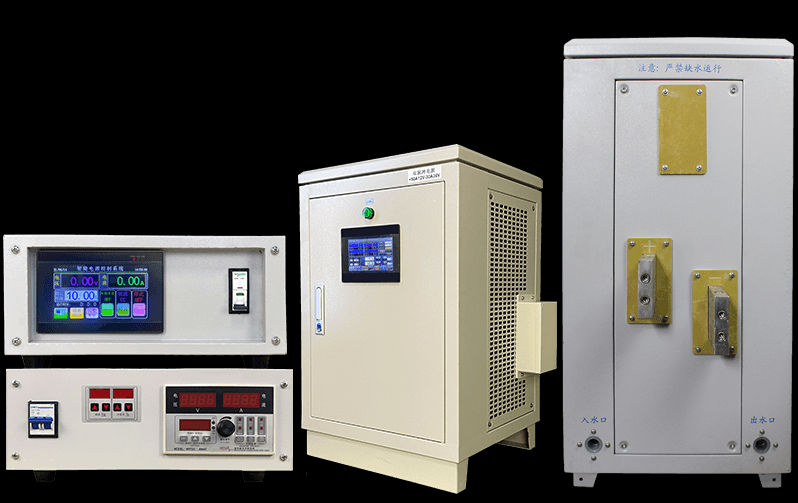
Current regulation plating rectifier
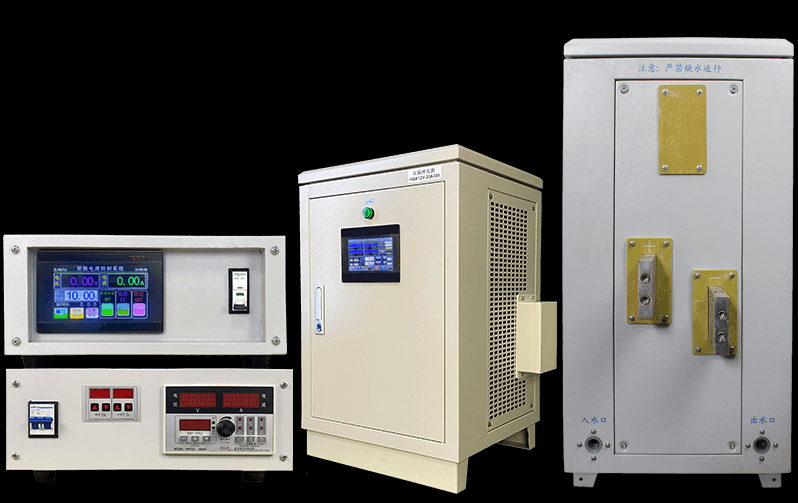
Understanding Plating Rectifiers: Overview of Working Principles
In the realm of electroplating, plating rectifiers stand as fundamental components, essential for converting alternating current (AC) into direct current (DC) to facilitate the electroplating process. At the core of industrial electroplating operations, a clear comprehension of the working principles of plating rectifiers is imperative. In this blog post, we delve into the foundational aspects of plating rectifiers, shedding light on their working principles and functionalities.
Introduction to Plating Rectifiers
Plating rectifiers serve as the backbone of electroplating setups, ensuring a steady and controlled supply of direct current required for the deposition of metal ions onto substrates. Understanding the basic working principles of plating rectifiers is pivotal for grasping their significance in industrial electroplating applications.
Overview of Working Principles
Plating rectifiers function by converting alternating current (AC), typically sourced from the mains power supply, into direct current (DC) suitable for electroplating processes. The conversion process involves rectification, where the alternating current is rectified to produce a unidirectional flow of current.
Rectification Techniques
Various rectification techniques are employed in plating rectifiers, including:
-
Half-Wave Rectification: In this technique, only one half of the AC waveform is utilized, resulting in pulsating DC output.
-
Full-Wave Rectification: Here, both halves of the AC waveform are rectified, yielding a smoother DC output compared to half-wave rectification.
-
Three-Phase Rectification: Utilized in high-power applications, three-phase rectifiers provide a more stable and efficient conversion of AC to DC.
Role of Control Mechanisms
Plating rectifiers often incorporate control mechanisms to regulate the output voltage and current, ensuring precise control over the electroplating process. This control is essential for achieving desired plating thickness, quality, and adherence to specifications.
Conclusion
In conclusion, plating rectifiers serve as indispensable components in electroplating setups, facilitating the conversion of alternating current to direct current for precise control and efficient deposition of metal ions. By understanding the basic working principles outlined in this blog post, individuals involved in electroplating processes can gain valuable insights into the functionality and importance of plating rectifiers.
For high-quality plating rectifiers tailored to your specific requirements, visit our website here.
With this blog post, we've provided a foundational understanding of plating rectifiers and their working principles. For further inquiries or assistance, feel free to contact us.
Direct current Electroplating rectifier
Current density Plating Rectifier