Understanding Linear Motion Bearing: Types, Working Principles, and How to Choose the Right One
Linear motion bearing play a crucial role in many mechanical systems, allowing for smooth, controlled motion in a single direction. From industrial automation to precision machinery, these bearings help reduce friction and wear in applications where linear movement is required. There are different types of linear motion bearings, each with unique working principles, advantages, and disadvantages. This guide explores the main types, including linear bushing bearings, linear slide bearings, and linear roller bearings, and offers tips on how to choose the best one for your specific needs.
Types of Linear Motion Bearing
1. Linear Bushing Bearing
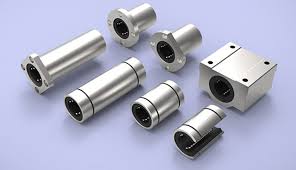
Linear bushing bearings, also known as ball bushings, are designed for applications requiring low-friction movement along a cylindrical shaft. They contain recirculating balls that roll along the shaft, providing smooth and precise linear motion. These bearings are ideal for light to moderate loads and are commonly used in CNC machines, 3D printers, and other precision equipment.
Pros:
- High precision and smooth motion.
- Low friction and wear.
- Easy to install and replace.
Cons:
- Not suitable for high-load applications.
- Sensitive to dirt and contamination.
Customer Question: Can linear bushing bearings be used in dusty environments?
While linear bushing bearings provide excellent precision, they are sensitive to dirt and debris, which can increase wear. In dusty environments, it’s essential to use bearings with proper sealing or opt for a different type that’s less affected by contaminants.
2. Linear Slide Bearings
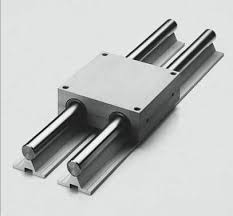
Linear slide bearings use a sliding mechanism, often consisting of a block and rail, to provide linear motion. Unlike bushing bearings, these do not rely on rolling elements but instead slide along the rail. This makes them ideal for applications requiring low speed and high load capacity.
Pros:
- Suitable for heavy loads.
- Lower cost compared to other types of bearings.
- Can operate in dirty or harsh environments.
Cons:
- Higher friction compared to rolling bearings.
- Limited to lower speeds.
Customer Question: Are linear slide bearings suitable for high-speed applications?
No, linear slide bearings are generally not suitable for high-speed applications due to their higher friction compared to rolling bearings. For high-speed requirements, consider linear bushing bearings or linear roller bearings.
3. Linear Roller Bearing
Linear roller bearings are designed to handle high-load capacities and offer low-friction movement. They feature cylindrical rolling elements (rollers) that provide smooth, linear motion. This type of bearing is commonly used in heavy-duty applications like industrial machinery and automotive systems.
Pros:
- High load capacity.
- Low friction, even under heavy loads.
- Suitable for long-term use with minimal wear.
Cons:
- Higher cost than bushing or slide bearings.
- Requires regular maintenance to ensure smooth operation.

Customer Question: How often should I maintain linear roller bearings?
Linear roller bearings require periodic maintenance, especially in high-load applications. Regular cleaning and lubrication are necessary to ensure long-lasting performance and prevent wear. The exact maintenance schedule depends on the working environment and load conditions.
How to Choose the Right Linear Motion Bearing
When selecting the right linear motion bearing for your project, consider the following factors:
-
Load Capacity: If your application involves heavy loads, opt for linear roller bearings for their high load-bearing capacity. For light loads, linear bushing bearings may be sufficient.
-
Speed Requirements: For high-speed applications, linear bushing bearings are an excellent choice due to their low friction. In contrast, linear slide bearings are better suited for low-speed, heavy-load applications.
-
Environmental Conditions: If your equipment operates in a dirty or harsh environment, linear slide bearings are ideal since they can withstand contaminants. However, for cleaner environments, bushing bearings or roller bearings can provide smoother, more precise motion.
-
Precision and Smoothness: If precision is critical, such as in CNC machines or 3D printers, linear bushing bearings offer the most accurate and smooth motion.
-
Maintenance: Consider the maintenance requirements of each bearing type. Roller bearings need regular upkeep, whereas slide bearings are more robust but have higher friction.
Conclusion
Understanding the differences between linear bushing bearings, linear slide bearings, and linear roller bearings can help you make an informed decision when selecting the best bearing for your application. Each type has its pros and cons, depending on the load, speed, and environmental conditions. By carefully evaluating your specific needs, you can choose the right bearing to ensure optimal performance and longevity.
Understanding Linear Motion Guide: Key Concepts and Applications
Choosing the Right 8mm Linear Bearing: Key Features and FAQs


