Enhancing Precision with Automation: Hydraulic Rotary Actuators and CNC Rotary Tables

In the world of precise automation and robotics, achieving accuracy and efficiency is crucial for optimizing industrial processes. Key components like hydraulic rotary actuators and CNC rotary tables play a vital role in enhancing the precision of automated systems. This article explores how these tools contribute to automation, their benefits, and addresses some common customer questions regarding their application and selection.
How Hydraulic Rotary Actuator Improve Automation
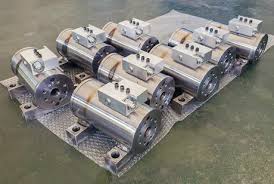
A hydraulic rotary actuator converts fluid pressure into rotary motion, making it an ideal choice for applications that require high torque in limited spaces. These actuators provide smooth, continuous rotation or can be configured for specific angular movements. Their compact design and high power output make them popular in various industries, including:
- Automotive Manufacturing: Used for assembly line tasks where precise rotational control is essential.
- Heavy Machinery: Ideal for applications that involve high loads, such as excavators and construction equipment.
- Robotics: Provides flexible motion control for robotic arms and other automation systems.
The main advantage of using hydraulic rotary actuators lies in their ability to deliver consistent torque throughout the rotation. This ensures that even heavy-duty tasks can be completed with minimal risk of mechanical failure.
The Role of CNC Rotary Table in Precision Machining
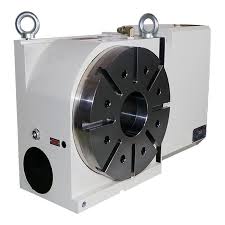
A CNC rotary table is a powerful tool used in milling, drilling, and other machining operations. It enables the workpiece to be rotated and precisely positioned, allowing for multi-axis machining and more complex shapes. The table integrates with CNC machines, enhancing their versatility by providing an extra axis of movement.
Key benefits of CNC rotary tables include:
- Increased accuracy: Offers fine control over the workpiece’s positioning, leading to improved machining precision.
- Greater flexibility: Allows for complex cuts and shapes that would be difficult or impossible with standard three-axis CNC machines.
- Efficient production: Reduces the need for manual repositioning of the workpiece, speeding up the manufacturing process.
Common Customer Questions
Q1: How do I choose between a hydraulic rotary actuator and an electric actuator?
When selecting an actuator, consider the following factors:
- Power requirements: Hydraulic actuators deliver higher torque, making them suitable for heavy-duty applications. Electric actuators, on the other hand, are better for precision tasks requiring low to medium torque.
- Maintenance needs: Hydraulic systems may require more maintenance due to fluid management, whereas electric actuators tend to have fewer moving parts and lower maintenance requirements.
- Environmental conditions: If the application is in a high-temperature or outdoor environment, hydraulic actuators may be more suitable due to their robustness.
Q2: What size of CNC rotary table do I need for my machining tasks?
The size of the CNC rotary table should be chosen based on:
- Workpiece dimensions: Ensure the table can accommodate the size and weight of the workpiece.
- Machine compatibility: Check the specifications of your CNC machine to ensure the rotary table fits and integrates seamlessly.
- Application requirements: Consider whether you need full rotary motion or if a specific angle range will suffice.
Q3: Can hydraulic rotary actuators be used in precise automation?
Yes, hydraulic rotary actuators are commonly used in precise automation tasks. They offer high torque and can be controlled accurately with the right valve and sensor configurations. However, for applications requiring ultra-fine control and repeatability, electric actuators might be more suitable.
Key Considerations for Choosing Automation Components
- Performance Needs: Identify the requirements for torque, speed, and precision.
- Cost: Consider your budget, but also weigh the long-term benefits of investing in high-quality components.
- Maintenance and Support: Choose suppliers that offer comprehensive support and spare parts availability.
Conclusion
Integrating components like hydraulic rotary actuators and CNC rotary tables can significantly enhance the precision and flexibility of automation systems. By understanding the factors influencing your choice and addressing common questions, you can ensure your automation setup is optimized for efficiency and accuracy in industrial applications.
Understanding Servo Motor Pricing: Yaskawa and DongGuan Gaozhi Servo Drive Options
Understanding Types of Servo Motor and How They Differ from Stepper Motors


