Understanding DC Servo Motor: Working Principles and Differences from AC Motors

DC servo motors play a crucial role in many automated systems, providing precise control over position, speed, and torque. Understanding their operation and how they differ from AC servo motors is essential for selecting the right motor for your automation needs.
What is a DC Servo Motor?
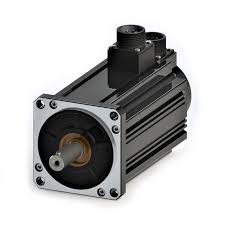
A DC servo motor is a specialized electric motor designed for precise motion control. It operates by using direct current (DC) to produce mechanical output. These motors are commonly used in robotics, conveyor systems, and other automated applications that require accurate positioning. The key advantage of DC servo motors lies in their ability to maintain precise control over motion parameters, even at low speeds.
How Does a DC Servo Motor Working principle?
The working principle of a DC servo motor revolves around its internal feedback mechanism, which helps adjust the motor's motion according to a desired setpoint. Here’s how it works:
- Input Signal: The motor receives a control signal that specifies the desired position or speed.
- Error Detection: The feedback system compares the actual position or speed with the desired value, calculating the error.
- Correction: The error signal adjusts the motor’s input to minimize the difference between the actual and desired output. This continuous adjustment ensures accurate motion control.
- Output Movement: The motor shaft rotates based on the corrected input, driving the mechanical system to the desired position or speed.
The motor's performance is directly influenced by its feedback system, which typically includes encoders or potentiometers for tracking movement.
Difference Between AC and DC Servo Motor
When it comes to choosing between AC and DC servo motors, several factors come into play. Here are the primary differences:
- Power Source: The most significant distinction is the power source. DC servo motors use direct current, while AC servo motors operate on alternating current. This difference affects their internal design and control mechanisms.
- Torque and Speed Characteristics: DC servo motors are known for their high torque at low speeds, making them suitable for applications requiring precision and slow motion. On the other hand, AC servo motors excel in high-speed operations with consistent performance.
- Control Complexity: DC servo motors typically offer simpler control systems compared to their AC counterparts. This simplicity can be advantageous for certain applications, but it may limit the motor's capabilities in more demanding tasks.
- Maintenance Requirements: Since DC motors have brushes that wear out over time, they generally require more maintenance than brushless AC servo motors, which have a longer lifespan and lower maintenance needs.
Why Choose a DC Servo Motor?
The choice between AC and DC servo motors ultimately depends on the application requirements. Here are some scenarios where a DC servo motor might be the better option:
- Robotics and Automation: For tasks requiring fine-tuned control and low-speed operations, such as robotic arms and precision tooling, DC servo motors offer excellent performance.
- Conveyor Systems: Applications involving conveyor belts or material handling benefit from the high torque of DC motors, especially at low speeds.
- Portable Devices: Since DC motors can run on batteries, they are ideal for portable applications where AC power is not available.

FAQs
1. Can a DC servo motor be used in place of an AC servo motor?
Yes, but it depends on the application requirements. DC motors are better for low-speed precision tasks, while AC motors are suited for high-speed operations.
2. What is the maintenance requirement for DC servo motors?
Regular maintenance includes checking and replacing brushes and ensuring the feedback system functions correctly.
3. Are there hybrid motors that combine features of both AC and DC servo motors?
Yes, some motors incorporate features from both to optimize performance across different applications.
Exploring M Tech in Automation and Robotics: The Role of Rotary Tables and Electric Actuators
Understanding Servo Motor Gearbox: Cost, Differences, and Applications


