Exploring Different Ball Screw Types and Their Applications

Ball screws play a critical role in converting rotary motion into linear motion with high precision and efficiency. They are commonly used in machinery where smooth, controlled, and precise movement is needed, such as in CNC machines and automation systems. But not all ball screws are the same. Various ball screw types are available to suit different applications. This article will explore these types and explain what is the purpose of using recirculating ball screw.
Types of Ball Screws
There are several types of ball screws based on their construction and the way they operate. The most common include:
-
Precision Ground Ball Screws These are made through a grinding process, which provides very high accuracy and smoothness in operation. Precision ground ball screws are typically used in applications where tight tolerances are necessary, such as in medical equipment and aerospace systems. They offer excellent load capacities and are ideal for applications requiring repeatability.
-
Rolled Ball Screws In contrast to ground ball screws, rolled ball screws are manufactured using a rolling process, which makes them less expensive to produce. Though they may not offer the same precision as ground ball screws, they are highly suitable for applications like general-purpose automation and machinery that don’t require extreme precision. Rolled ball screws are also highly durable and can handle significant loads.
-
Miniature Ball Screws Miniature ball screws are designed for small-scale applications. These are often used in compact devices where space is limited, such as in robotics, laboratory instruments, and micro-machining. Despite their small size, they can provide high levels of accuracy and smooth movement.
-
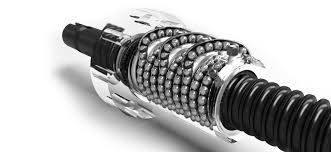
Recirculating Ball Screws Recirculating ball screws are a specific type that employs ball bearings to reduce friction between the screw shaft and the nut. This design helps in improving efficiency and wear resistance over time. Recirculating ball screws are commonly found in CNC machines, where they allow for fast and precise movement over long distances.
What is the Purpose of Using Recirculating Ball Screw?
The purpose of using recirculating ball screws is to reduce friction and increase efficiency in motion systems. Traditional lead screws experience significant friction between the screw and nut, which can lead to heat buildup, energy loss, and wear over time. In contrast, recirculating ball screws use ball bearings to create a rolling motion between the screw and the nut. This rolling motion minimizes friction, allowing for smoother and faster operation.
Additionally, recirculating ball screws provide higher load capacity, making them ideal for heavy-duty applications where precision is required. Their durability ensures they maintain performance over long periods with minimal maintenance. Industries such as aerospace, robotics, and manufacturing frequently rely on recirculating ball screws to achieve fast, accurate, and reliable movement.
Key Considerations When Selecting a Ball Screw
When selecting the right ball screw type for your application, consider the following factors:
- Accuracy requirements: Precision ground ball screws are best for high-precision applications.
- Load capacity: Ensure the ball screw can handle the required load without compromising performance.
- Speed: Different ball screw types handle different speeds efficiently.
- Durability: Recirculating ball screws provide excellent long-term reliability, especially in high-use environments.
- Cost: Rolled ball screws are a more cost-effective solution for less demanding applications.
Understanding the various ball screw types and their specific applications is essential for choosing the right one for your machinery or system. The use of recirculating ball screws offers significant advantages in terms of efficiency, reduced friction, and extended lifespan, making them a top choice in many industries. Whether you need a precision ground ball screw or a cost-effective rolled one, the right ball screw can improve the performance and longevity of your equipment.
Exploring Ball Screw Actuator, Bearing Supports, and Leads: How They Work Together and Choosing the Right Accessories
How to Choose the Right Ball Screw: Thread Types and Leading Manufacturers


