Key Features and Advantages of Different Robotic Arms

In today’s rapidly evolving industrial landscape, robotic arms play a pivotal role in automating tasks across various sectors. From assembly lines to precision welding, different types of robotic arms offer distinct advantages based on their design and power source. This article will explore the articulated robot arm, camera robot arm, and hydraulic powered robotic arm, highlighting their key features and benefits.
Articulated Robot Arm: Precision and Versatility
The articulated robot arm is one of the most versatile robotic arms available today. With its multiple joints, this type of arm is designed to mimic the human arm, providing a wide range of motion. These arms are commonly used in industries such as automotive manufacturing, packaging, and metalwork due to their ability to handle complex movements.
Advantages:
- Multiple Degrees of Freedom: With 4 to 6 axes, the articulated robot arm can perform intricate tasks that require precise movements in various directions.
- High Payload Capacity: These arms can lift heavy objects, making them ideal for large-scale industrial applications.
- Flexibility: Articulated robot arms can be programmed for a variety of tasks, from simple pick-and-place to detailed assembly.
This flexibility makes articulated robot arms highly sought after in environments where adaptability is key.
Camera Robot Arm: Enhanced Vision for Precision Tasks
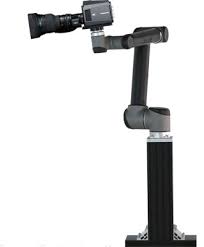
A camera robot arm is equipped with vision systems that allow it to “see” and adapt to its surroundings. This type of robotic arm is frequently used in tasks requiring high precision, such as quality control, sorting, and inspection in the electronics and pharmaceutical industries.
Advantages:
- Real-time Visual Feedback: The integrated camera provides real-time imaging, allowing the arm to adjust its movements based on the visual data.
- Accuracy in Inspection: These arms are perfect for applications where visual accuracy is paramount, such as detecting defects or ensuring product consistency.
- Smart Automation: The combination of robotics and vision systems results in a smarter, more adaptable robotic arm, reducing the need for manual intervention.
The camera robot arm is particularly beneficial in industries where precision is critical, enabling faster and more accurate production processes.
Hydraulic Powered Robotic Arm: Power and Durability
The hydraulic powered robotic arm is designed for heavy-duty applications where strength and durability are required. Powered by hydraulic fluids, these arms are capable of exerting tremendous force, making them suitable for tasks like construction, demolition, and handling heavy machinery.
Advantages:
- High Power Output: Hydraulic systems provide more force than electric or pneumatic systems, allowing these arms to lift and manipulate heavier objects.
- Robust Design: Hydraulic powered robotic arms are built to withstand harsh conditions, making them ideal for outdoor and heavy-duty industrial environments.
- Precision in Heavy Tasks: Despite their power, hydraulic robotic arms can still perform precise movements, making them a reliable option for tasks that require both strength and accuracy.
These robotic arms are indispensable in industries where power is essential, such as construction, mining, and large-scale manufacturing.

Conclusion: Selecting the Right Robotic Arm
Choosing the right robotic arm depends on the specific needs of your industry. An articulated robot arm offers flexibility and precision, making it ideal for complex manufacturing tasks. A camera robot arm brings visual accuracy to industries requiring meticulous inspection and control, while a hydraulic powered robotic arm delivers strength and durability for heavy-duty applications.
By understanding the unique features of each type of robotic arm, you can select the one that best meets your automation goals, ensuring efficiency, productivity, and cost savings across your operations.
How to Choose and Buy Robotic Arm
Revolutionizing Automation with Hydraulic Robotic Arm: Precision and Innovation


