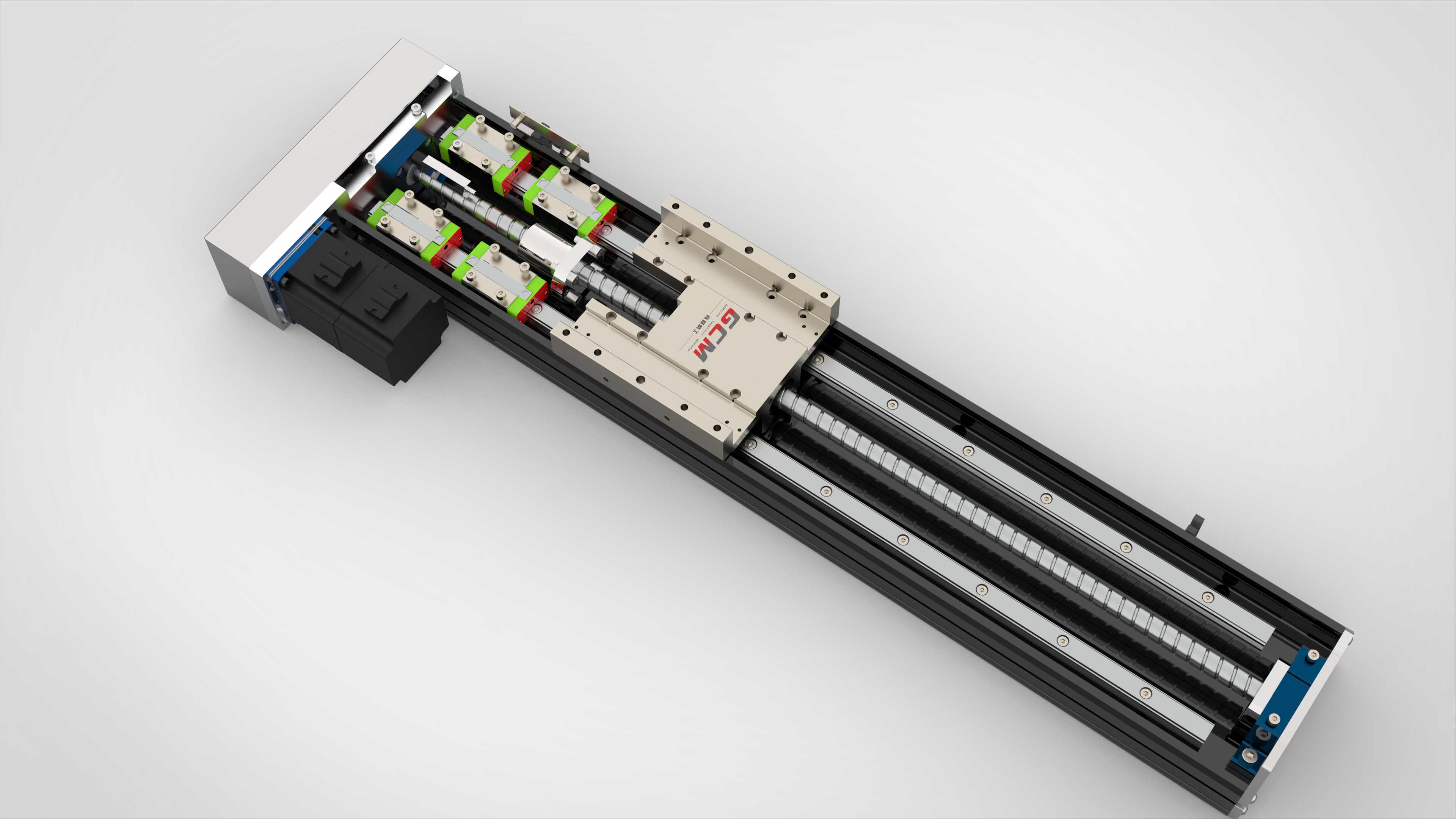
Servo motor mechanical modular design

Introduction
As a professional with over 10 years of experience in mechanical design engineering, I am honored to share this article, delving into the key aspects and intricate details of mechanical module design. These modules find extensive applications in industrial fields such as laser cutting, robotics, and CNC precision machining, providing robust support for advanced manufacturing across various industries.
Design Objectives
When defining design objectives, we comprehensively consider environmental factors, including temperature and humidity, and pay particular attention to crucial load-bearing capabilities. For screw-driven systems, we aim for a repeatability accuracy of up to ±0.01 millimeters. This article uses the application of mechanical modules in laser cutting equipment as an example to explore these objectives in depth.
Structural Design
The mechanical linear module utilizes a high-precision ground screw (±0.02 mm) as its driving element, with a diameter of 32 millimeters, a pitch of 10 millimeters, a speed of 500 mm/second, and a load capacity of 40 kg. High-precision linear guides and silent rolling ball sliders are employed for guidance. During the assembly process, the horizontal and vertical alignment of the guides must strictly adhere to the requirements specified in the process documents to ensure overall precision meets customer demands. The design places a high emphasis on structural stability and reliability, taking into account environmental factors such as the maximum temperature in a sheet metal workshop reaching 40°C.
Material Selection
Careful material selection includes aluminum die-casting for the outer shell of the mechanical module. Components are machined using CNC automated milling to ensure tolerances meet the precision required for assembly. The use of ball screw drive ensures compliance with the strict precision requirements set by customers.
Motion Control System
To achieve efficient and precise motion, a 400W servo motor is employed, coupled with a 16-bit encoder. Additionally, a planetary gearbox is added to meet customer requirements for load capacity.
Accuracy and Error Control
The design explicitly defines accuracy requirements and employs effective error control measures. Material selection, such as using a ground screw with a precision of ±0.02 mm (C5 class) as opposed to a regular rolled screw with a precision of ±0.05 mm (C7 class), underscores the importance of measurement and calibration methods to ensure system accuracy aligns with design standards.
Lubrication System
An automatically controlled centralized oiling system is designed, connecting oil nozzles and tubes to the oil inlets of sliders and screw nuts. This ensures smooth movement of sliding components, enhances lifespan, especially in diverse working environments like sheet metal workshops.
Safety Considerations
To guarantee the safety of both users and equipment during operation, the electronic control section includes features such as origin, forward, and reverse limit switch protection, as well as emergency stop functions. The mechanical section incorporates a dual safeguard system with collision cushioning devices.
Production and Manufacturing Feasibility
Consideration of manufacturability involves streamlining the manufacturing process, reducing costs, and improving production efficiency. Rational selection of machining processes is crucial to ensuring the practical feasibility of the design in actual production.
Maintainability and Repairability
Through the design of a maintenance-friendly structure and the use of interchangeable and universally applicable module components, a substantial inventory of readily available parts is maintained, reducing repair time and costs. Continuous structural optimization keeps pace with advancements.
Conclusion
Summarizing the key points of the design emphasizes the importance of meeting design objectives. Simultaneously, looking forward to potential future improvements aims to continually elevate the level of module design. Through these optimizations, we ensure that the mechanical linear module performs exceptionally in practical applications, meeting diverse requirements. Anticipating the sharing of this remarkable engineering achievement on the company's official blog, we hope it serves as inspiration and reference for colleagues in the industry. For further details, readers can visit the company's official website.
As a professional with over 10 years of experience in mechanical design engineering, I am honored to share this article, delving into the key aspects and intricate details of mechanical module design. These modules find extensive applications in industrial fields such as laser cutting, robotics, and CNC precision machining, providing robust support for advanced manufacturing across various industries.
Design Objectives
When defining design objectives, we comprehensively consider environmental factors, including temperature and humidity, and pay particular attention to crucial load-bearing capabilities. For screw-driven systems, we aim for a repeatability accuracy of up to ±0.01 millimeters. This article uses the application of mechanical modules in laser cutting equipment as an example to explore these objectives in depth.
Structural Design
The mechanical linear module utilizes a high-precision ground screw (±0.02 mm) as its driving element, with a diameter of 32 millimeters, a pitch of 10 millimeters, a speed of 500 mm/second, and a load capacity of 40 kg. High-precision linear guides and silent rolling ball sliders are employed for guidance. During the assembly process, the horizontal and vertical alignment of the guides must strictly adhere to the requirements specified in the process documents to ensure overall precision meets customer demands. The design places a high emphasis on structural stability and reliability, taking into account environmental factors such as the maximum temperature in a sheet metal workshop reaching 40°C.
Material Selection
Careful material selection includes aluminum die-casting for the outer shell of the mechanical module. Components are machined using CNC automated milling to ensure tolerances meet the precision required for assembly. The use of ball screw drive ensures compliance with the strict precision requirements set by customers.
Motion Control System
To achieve efficient and precise motion, a 400W servo motor is employed, coupled with a 16-bit encoder. Additionally, a planetary gearbox is added to meet customer requirements for load capacity.
Accuracy and Error Control
The design explicitly defines accuracy requirements and employs effective error control measures. Material selection, such as using a ground screw with a precision of ±0.02 mm (C5 class) as opposed to a regular rolled screw with a precision of ±0.05 mm (C7 class), underscores the importance of measurement and calibration methods to ensure system accuracy aligns with design standards.
Lubrication System
An automatically controlled centralized oiling system is designed, connecting oil nozzles and tubes to the oil inlets of sliders and screw nuts. This ensures smooth movement of sliding components, enhances lifespan, especially in diverse working environments like sheet metal workshops.
Safety Considerations
To guarantee the safety of both users and equipment during operation, the electronic control section includes features such as origin, forward, and reverse limit switch protection, as well as emergency stop functions. The mechanical section incorporates a dual safeguard system with collision cushioning devices.
Production and Manufacturing Feasibility
Consideration of manufacturability involves streamlining the manufacturing process, reducing costs, and improving production efficiency. Rational selection of machining processes is crucial to ensuring the practical feasibility of the design in actual production.
Maintainability and Repairability
Through the design of a maintenance-friendly structure and the use of interchangeable and universally applicable module components, a substantial inventory of readily available parts is maintained, reducing repair time and costs. Continuous structural optimization keeps pace with advancements.
Conclusion
Summarizing the key points of the design emphasizes the importance of meeting design objectives. Simultaneously, looking forward to potential future improvements aims to continually elevate the level of module design. Through these optimizations, we ensure that the mechanical linear module performs exceptionally in practical applications, meeting diverse requirements. Anticipating the sharing of this remarkable engineering achievement on the company's official blog, we hope it serves as inspiration and reference for colleagues in the industry. For further details, readers can visit the company's official website.
High precision screw mechanical module
rotary to linear motion conversion