
Understanding Ball Screw Nuts and the Difference Between Lead Screws and Ball Screws

When working with precision machinery, the right components can make all the difference. Ball screws and lead screws are two commonly used systems for linear motion. But what distinguishes them? And what role does a ball screw nut play in ensuring efficient performance? Let’s break it down, and answer some of the most frequent customer questions along the way.
What is a Ball Screw Nut?
A ball screw nut is an integral component in a ball screw system. It works in tandem with the screw shaft to convert rotational motion into linear motion with high efficiency. The nut contains ball bearings that reduce friction and wear, making ball screw systems ideal for high-precision and heavy-duty applications. Unlike lead screws, which operate through sliding motion, ball screws rely on rolling motion, thanks to the ball bearings, which greatly reduces friction.
Customers often ask, "Why choose a ball screw nut over other options?" The primary reason is efficiency. Ball screws, with their unique nut design, allow for much smoother and faster movements with less resistance, making them perfect for applications requiring precision, such as CNC machines, robotic systems, and aerospace technology.
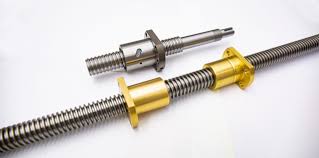
One of the most common questions customers have is, “What is the difference between lead screw and ball screw?”
-
Efficiency: A key difference between lead screws and ball screws lies in their efficiency. Lead screws typically have more friction due to sliding motion, which can lead to wear over time. On the other hand, ball screws use ball bearings within the nut, which allows for more efficient movement and longer lifespan.
-
Precision: Ball screws offer greater precision compared to lead screws because of the reduced friction. The rolling motion of ball bearings ensures consistent and smooth operation, making them ideal for tasks that require high accuracy, like positioning in CNC machines.
-
Load Capacity: Ball screws are better suited for high-load applications because they distribute load evenly across the ball bearings, reducing wear. Lead screws, though simpler and less costly, are more prone to wear under heavy loads and require more frequent maintenance.
-
Cost: While ball screws offer higher efficiency and longer life, they come at a higher price point. Lead screws are more affordable and can work well in applications that don’t require high precision or heavy loads, such as in 3D printers and simple linear actuators.
Common Customer Concerns
Many customers wonder, "Which one should I choose for my project?" The answer depends on the specific application. If your project involves high precision and you’re dealing with heavy loads, a ball screw with a quality ball screw nut will provide the reliability and performance you need. For more straightforward applications, such as light load movements or lower precision needs, lead screws are a cost-effective option.
Another frequent question is about maintenance. Ball screws generally require more precise lubrication to maintain optimal performance, whereas lead screws may require more frequent replacement due to higher wear and tear.

Making the Right Choice
In summary, when choosing between a ball screw and a lead screw, it’s essential to consider the efficiency, precision, and load demands of your project. For tasks requiring high accuracy and durability, the ball screw system with a well-designed ball screw nut will outperform a lead screw. However, if your application is less demanding in terms of load and precision, a lead screw could be the more cost-effective solution.
By understanding the differences between these two systems, you can make an informed decision that ensures your machinery operates efficiently and reliably.
Understanding Ball Screw Bearing for CNC Machines
Exploring Ball Screw Actuator, Bearing Supports, and Leads: How They Work Together and Choosing the Right Accessories


