Understanding Linear Bearing Types and Their Applications

Linear bearing play a vital role in machinery, allowing objects to move smoothly along a straight path with minimal friction. They are widely used in a variety of industries, including automation, robotics, and manufacturing. Understanding linear bearing types and selecting the right one can greatly impact the efficiency, accuracy, and longevity of your equipment.
Different Types of Linear Bearing
There are several types of linear bearings, each designed for specific applications. Here are the most common ones:
1. Ball Bushing Bearings
Ball bushing bearings use recirculating ball tracks that run in precision ground paths. They offer low friction and high accuracy, making them ideal for applications that require precise movement, such as 3D printers and medical devices.
2. Roller Bearings
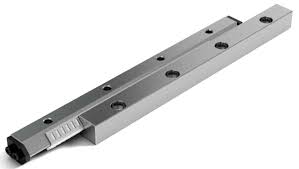
Roller bearings are designed to support heavy loads and operate smoothly under high pressure. They are ideal for industrial machinery that requires robust, high-load support, such as CNC machines and large-scale automation systems.
3. Plain Bearings
Plain bearings, also known as bushings, are simple, friction-reducing elements that require no moving parts. They are ideal for applications where precision isn't as critical but durability and cost-efficiency are important, like conveyor belts and automotive assemblies.
Choosing the Right Linear Bearing
Choosing the right linear bearing is crucial for ensuring optimal performance and longevity. Consider the following factors:
- Load Capacity: The weight your bearing must support will influence your choice. Roller bearings, for example, are better suited for heavy loads, while ball bushing bearings are ideal for lighter loads that require precision.
- Speed: High-speed applications, such as in automation or robotics, may require ball bushing bearings due to their low friction and smooth movement.
- Precision: For applications requiring high accuracy, such as in CNC machining, ball bushing bearings offer the best solution.
- Environmental Conditions: If your application is exposed to dirt, dust, or chemicals, a sealed roller bearing may offer better protection and longer life.
Key Applications for Linear Bearings
Linear bearings are used across various industries to improve the precision and efficiency of machinery. Some key applications include:
- 3D Printing: Ball bushing bearings allow for the smooth and precise movement required in 3D printing processes.
- CNC Machining: Roller bearings can handle the heavy loads and precise movements needed in CNC machines.
- Robotics: Linear bearings are essential in robotic arms for ensuring smooth, accurate, and repeatable movements.

Customer Concerns Addressed
Q: How do I know which linear bearing is right for my application?
A: Consider the load, speed, and precision requirements of your application. For heavy loads, choose roller bearings, and for precision, ball bushing bearings are a great choice.
Q: Are linear bearings expensive to maintain?
A: Maintenance costs depend on the type of bearing. Ball bushing bearings may require more maintenance due to their complexity, while plain bearings are simpler and more cost-effective over time.
Conclusion
Understanding the types of linear bearings is essential to making informed decisions in automation, manufacturing, or robotics. Whether you need precision, load-bearing capacity, or durability, selecting the right linear bearing can significantly enhance your system’s performance.
Understanding Laser Instrument for Measuring Distance: How Bosch GLM 40 Integrates with Our Linear Mechanical Modules
The Difference Between Ball Screw and Lead Screw: How to Choose the Best Option


