Understanding Linear Motion Bearing and Their Role in Robotic Arms

DongGuan Gaozhi Transmission Co., Ltd. is a leader in the industrial robotics and automation industry, specializing in providing high-precision solutions for robotic arms and other automation systems. One critical component in achieving precise motion control in these systems is the linear motion bearing, which allows smooth and accurate linear movement. This article will delve into the applications of linear motion bearings, the difference between linear and circular motion, and explain how mass affects rotational motion.
What Is a Linear Motion Bearing?
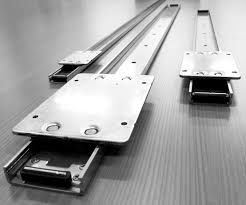
A linear motion bearing is a component designed to enable movement in a straight line. It’s essential in various applications, especially in coordinate robotic arms, where precise movement along a defined axis is required. These bearings are often used in conjunction with linear rails and actuators to provide stability and smooth operation.
At DongGuan Gaozhi Transmission Co., Ltd., our expertise in linear motion technology enables us to provide solutions that enhance the performance of automated systems, ensuring they can handle high loads while maintaining accuracy.
Difference Between Linear Motion and Circular Motion
Understanding the difference between linear and circular motion is key when choosing components for automation systems.
-
Linear Motion: This involves movement along a straight path, typically found in robotic arms designed for tasks that require precise positioning or handling materials in a straight line. Applications include tasks like welding, material transportation, and CNC machining. Linear motion offers higher precision and is ideal for tasks requiring accuracy.
-
Circular Motion: Circular motion occurs around a fixed axis, where a part or object rotates in a circular path. This type of motion is commonly used in rotating joints of robotic arms or in processes like assembly lines that require repetitive circular movement.
The Rotational Analogue of Mass in Linear Motion is
In linear motion, mass plays a crucial role in determining how much force is needed to accelerate or decelerate an object. However, in rotational motion, the equivalent of mass is called moment of inertia. This is the rotational analogue of mass in linear motion and defines how much torque is required to rotate an object around an axis.
For instance, in applications where robotic arms perform rotational tasks, understanding the moment of inertia becomes important for optimizing speed and force. DongGuan Gaozhi Transmission Co., Ltd. focuses on providing solutions that account for these physical principles, ensuring smoother and more efficient operations.
Customer Questions
Question 1: "How do I decide whether my system needs linear or circular motion bearings?"
Answer: It depends on the type of movement your application requires. If your robotic arm needs to perform straight-line, precise actions, linear motion bearings are ideal. For applications involving rotational or repetitive circular movements, bearings designed for circular motion would be more appropriate. Our experts at Gaozhi can help you make the right choice based on your specific requirements.
Question 2: "How does the rotational analogue of mass affect my robotic arm's performance?"
Answer: The moment of inertia impacts how much torque your system needs to rotate components efficiently. Higher moments of inertia will require more torque to achieve rotation, which can affect the speed and energy consumption of your system. Understanding this principle is key when designing systems with rotational components.
Conclusion
Linear motion bearings are essential components in industrial robotics, providing the precision and stability needed for straight-line movements. By understanding the difference between linear motion and circular motion, and the role of mass in rotational systems, companies can make informed decisions when designing their automation systems. At DongGuan Gaozhi Transmission Co., Ltd., we are committed to offering reliable, high-quality solutions that meet the diverse needs of our clients in automation and robotics.
Optimizing Robotic Arms with Linear Motion Solutions
How to Choose the Right Linear Guide Rail and Heavy Duty Linear Guide Rails


