Understanding Types of Servo Motor and How They Differ from Stepper Motors
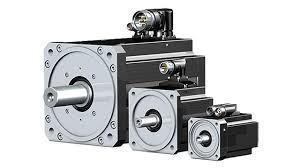
Servo motors are widely used in automation, robotics, and industrial applications due to their precision and control capabilities. There are various types of servo motor, each suited for different tasks. In this article, we will explore the different types of servo motors and discuss the difference between stepper motor and servo motor to help you understand which one might be the better choice for your application.
Types of Servo Motor
Servo motors come in different variations, each with its own specific use cases. The main types include:
-
AC Servo Motor
AC servo motors use alternating current to generate motion. They are known for their efficiency, precision, and ability to handle high power requirements. Common applications include industrial automation and robotics, where smooth operation and high torque are needed. -
DC Servo Motor
DC servo motors, powered by direct current, offer simpler construction and easier speed control. They are often used in smaller applications like RC cars, drones, and other hobbyist projects where precision control at lower power levels is sufficient. -
Positional Rotation Servo Motor
These servo motors are limited to a 180-degree rotation and are used in applications like robotic arms, RC vehicles, and other devices that need controlled and repetitive motion. -
Continuous Rotation Servo Motor
Unlike positional servos, continuous rotation servos can rotate infinitely in either direction. They are commonly found in conveyor belts and wheels that require continuous motion. -
Linear Servo Motor
Linear servo motors convert rotational motion into linear motion. This makes them ideal for applications like CNC machinery and robotic actuators where linear movement is required.

Difference Between Stepper Motor and Servo Motor
While both stepper and servo motors are used in positioning and motion control, they have significant differences:
-
Control Mechanism:
A stepper motor operates in discrete steps, moving in fixed increments, which allows for precise positioning. However, it lacks feedback for error correction. In contrast, a servo motor has a feedback mechanism (often an encoder) that continuously monitors its position, ensuring more accurate movement and better response to errors. -
Torque and Speed:
Servo motors provide higher torque at high speeds compared to stepper motors. Stepper motors can lose torque at higher speeds, which limits their usefulness for applications requiring fast, smooth motion. -
Cost and Complexity:
Stepper motors tend to be simpler and more affordable due to the absence of feedback systems. Servo motors, on the other hand, are more complex and expensive because they require additional components like encoders and control systems for feedback and precise control. -
Applications:
Stepper motors are ideal for applications that require holding torque and low-to-medium speed control, such as 3D printers, plotters, and positioning systems. Servo motors are better suited for dynamic applications needing high speed and torque, such as robotic arms, conveyor belts, and industrial machines.
Choosing the Right Motor for Your Needs
When deciding between stepper motors and servo motors, consider the following factors:
- Precision Requirements: If your application demands high accuracy and feedback, servo motors are the way to go.
- Speed and Torque Needs: For high-speed applications with significant torque, choose a servo motor. For lower-speed tasks, a stepper motor may be sufficient.
- Budget Constraints: Stepper motors are generally more affordable, making them suitable for cost-sensitive projects.
Conclusion
Understanding the different types of servo motors and the difference between stepper motor and servo motor is crucial for choosing the right component for your automation or robotics projects. Each motor type has unique strengths and applications, so carefully evaluate your project’s requirements to make the best choice.
Whether you are aiming for precision in robotics or need reliable speed control in automation, knowing these differences will help you optimize your system for better performance.
Enhancing Precision with Automation: Hydraulic Rotary Actuators and CNC Rotary Tables
Choosing the Right Servo Motor: Mini Servo Motor vs. High Torque and Comparison with Stepper Motors


